

Xreal is preparing to launch its upcoming Aura smart glasses later this year, bringing a new generation of Android XR hardware powered by Qualcomm’s latest virtual and augmented reality chipset. The new processor is designed to improve graphics performance, extend battery efficiency, and deliver stronger AI capabilities for future immersive devices.
The Aura glasses are being developed as a lightweight alternative to traditional VR headsets, combining an advanced XR experience with a compact design. Instead of placing all computing hardware inside the glasses, the system connects to a small external processing unit that handles the heavy workloads.
One of the biggest surprises is the power of the chip inside the device. Qualcomm’s Snapdragon Reality Elite platform offers significant improvements over previous XR processors, with upgrades focused on visual performance, processing speed, and artificial intelligence. The graphics system is expected to deliver major gains compared with earlier generations, while the dedicated AI hardware provides a substantial boost for machine-learning tasks.
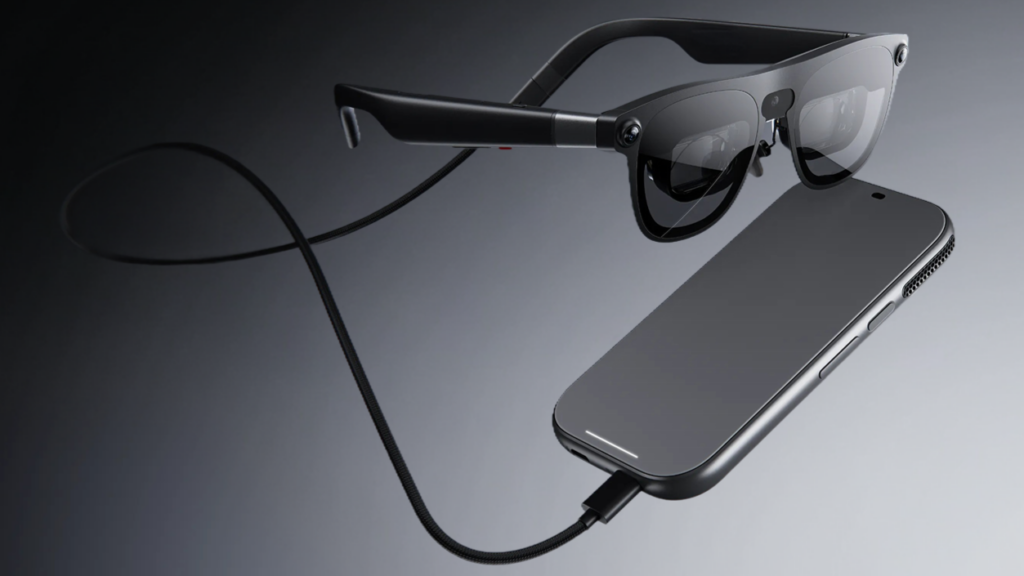
The new platform is capable of supporting high-resolution displays, including up to 4.4K resolution per eye for compatible headsets and glasses. This makes it suitable for next-generation XR products that aim to provide sharper visuals and more realistic environments.
Artificial intelligence is becoming an increasingly important part of extended reality devices, and the new processor reflects that trend. Many current smart glasses rely heavily on connected smartphones for AI functions, while VR headsets have traditionally focused more on gaming and visual experiences. As XR hardware becomes smaller and closer to everyday glasses, AI-powered features are expected to become much more common.
Aura is built around Google’s Android XR platform and integrates AI features designed to understand surroundings, assist users in real time, and interact with applications more naturally. The system is intended to support tasks such as analyzing information, helping with productivity, and providing contextual assistance without requiring users to constantly interact with a phone.
Battery life is another area where the new chip aims to improve. Qualcomm says the processor can deliver better efficiency during similar workloads compared with older XR hardware, while also producing less heat. This is especially important for smaller devices worn close to the face, where cooling becomes more difficult than with traditional VR headsets.
The processor is also designed to handle complex sensor setups, supporting multiple cameras and tracking systems simultaneously. Modern XR devices often rely on eye tracking, hand tracking, spatial awareness, and environmental cameras, all of which require significant computing power. Additional support for newer wireless standards also helps prepare devices for faster connections and lower latency.
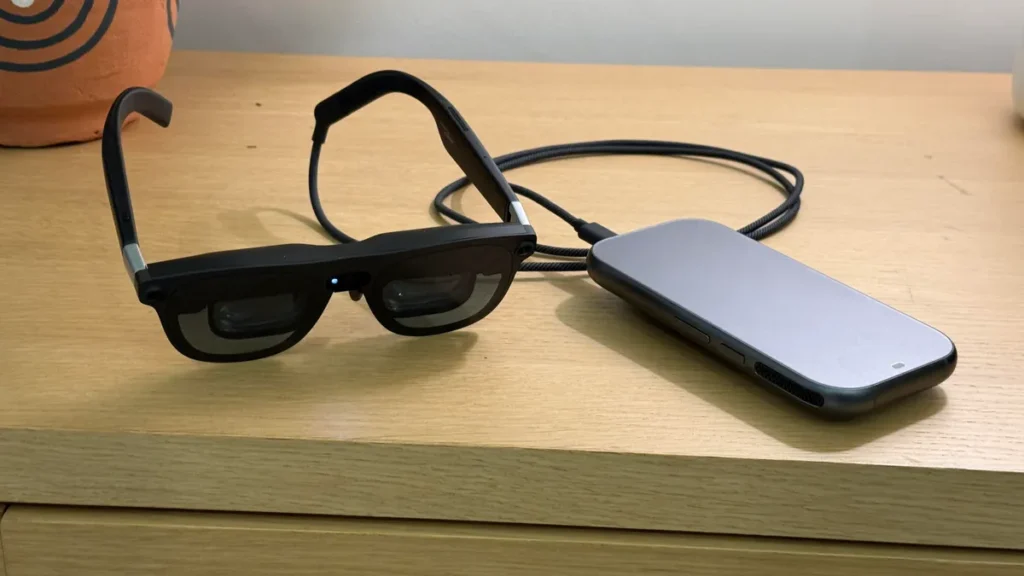
The arrival of Aura could mark the beginning of a wider transition in the XR market. Future headsets and smart glasses from other manufacturers may also adopt the same platform as companies continue moving toward more compact, AI-focused wearable technology.
While dedicated XR devices still need to prove their long-term appeal, the combination of stronger AI processing, improved efficiency, and more natural interactions could help push smart glasses closer to becoming mainstream products.
Xreal’s new hardware represents more than just another pair of smart glasses. It points toward a future where wearable devices combine immersive visuals, intelligent assistants, and real-world awareness in a form factor designed for everyday use.